
Table of Contents
101 Fascinating and Interesting Facts About Colombia You Never Knew
Introduction: Why Colombia Is the World’s Most Underrated Country
For decades, people only heard about Colombia’s troubled past. This old story hides the breathtaking reality of the country today. Now, this South American nation is changing at a fast pace. It is seeing big growth in its culture and economy. This is why more travelers, investors, and nature lovers are visiting every year in record numbers. Colombia is a land of extremes, natural wonder, and endless resilience.
If you are planning a trip, seeking educational facts about Colombian history, or simply aiming to understand the vibrant soul of modern Latin America, you need to look beyond the headlines. This complete guide presents 101 verified and interesting facts about Colombia, offering the depth and detail required to completely reframe your perception of the country. From possessing the world’s greatest biodiversity to hosting the origin of the legend of El Dorado, Colombia holds more secrets and world records than almost any other nation on earth.
Prepare to explore the true essence of a country defined by its two oceans, towering Andes mountains, literary giants, and the warmest of people. We promise this is the only list of unique facts about Colombia you will ever need.
The Land of Extremes: Colombia Geography Facts and Biodiversity Records
Colombia is truly the Land of Extremes, positioned at the nexus of the Amazon, the Andes, the Pacific, and the Caribbean. It is designated as one of the world’s 17 “megadiverse” countries, but its records go even further.
Unmatched Biodiversity: Colombia Biodiversity Facts
While Brazil often receives the spotlight, per square kilometer, Colombia is arguably the most biologically intense nation on the planet. This natural richness provides some of the most startling interesting facts about Colombia.
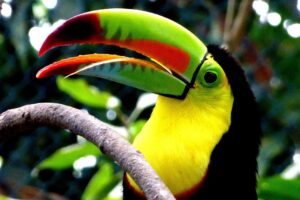
- World’s Number One in Birds: Colombia holds the indisputable world record for the highest number of bird species, boasting over 1,900 unique avian species.
- This represents nearly 20% of the entire global bird population. This figure includes around 79 species that are endemic, meaning they can only be found within Colombia’s borders.
Here are three of the most unique looking birds found in Colombia:
- Andean Cock-of-the-Rock (Rupicola peruvianus)|
- Shockingly Unique Feature: The male has a spectacular, flattened, brilliant scarlet-orange crest that completely covers its beak, giving its head a massive, disc-like appearance.
- Description: The rest of the male’s plumage is deep black. These birds are famous for their lek displays, where the males gather to perform elaborate, head-bobbing, squawking dances to attract a mate.
- Buffy Helmetcrest (Oxypogon stuebelii)
- Shockingly Unique Feature: A stunning combination of an upright, triangular, beige and black “helmet” crest and an iridescent, shimmering green throat “beard” (gorget).
- Description: This endangered hummingbird lives in the high-altitude páramo grasslands of the Central Andes. The unique crest and beard make it look like a tiny, jewel-toned warrior or a fantastical creature.
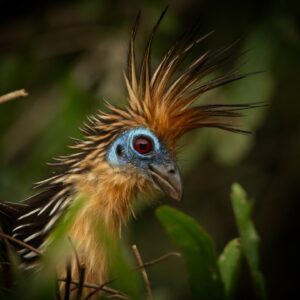
- Hoatzin (Opisthocomus hoazin)
- Shockingly Unique Feature: Often described as a “prehistoric” bird due to its primitive appearance, which includes a messy, spiky crest, an unfeathered blue face, and the bizarre fact that its chicks have claws on their wings to help them climb trees.
- Description: Found in the Colombian Amazon, this large, chestnut-brown bird is weak in flight and has a punk-rock crest. It is herbivorous and has an unusually large crop (a muscular pouch in the throat) that ferments the leaves it eats, making it smell somewhat unpleasant (earning it the nickname “stinky bird”).
For more detailed information on the birds of Colombia check out The World Record for Birds:
- The Orchid Capital:
The country is home to more than 4,270 species of orchids, ranking it number one globally for this floral diversity. The national flower, the Christmas orchid (Cattleya trianae), symbolizes the nation’s natural beauty.Orchid Flowers
The Humboldt Institute is Colombia’s official biodiversity research body.
- Amphibian & Butterfly Powerhouse: Colombia ranks second globally for diversity in amphibians (over 800 species) and butterflies (over 3,200 species), making it an ecological treasure trove for researchers.
- A Fifth of the Amazon: Approximately 10% of the entire Amazon Rainforest falls within Colombia’s borders, providing critical habitat and flowing into the Amazon River.
- The Pink River Dolphin: One of the most unique creatures in the Colombian Amazon is the boto, or pink river dolphin (Inia geoffrensis), an incredibly rare freshwater species.
- World-Record Landscapes and Colombia’s Two Coastlines
Colombia’s geography is defined by the three branches of the Andes mountains that traverse the country, creating incredible variation in climate and scenery.
- The Only South American Country with Two Coastlines:
A rare and pivotal Colombia geography fact is that it is the only nation in South America to have coastlines on Colombia’s two coastlines: the Pacific Ocean and the Caribbean Sea.
- This grants it 2,900 kilometers of coastline and two entirely different marine ecosystems.
- The World’s Tallest Palm Trees: The Cocora Valley, located near Salento in the Eje Cafetero, is home to the world’s tallest palm trees, the majestic Quindío wax palm (Ceroxylon quindiuense). These palms can reach heights of up to 60 meters (nearly 200 feet).
- The Liquid Rainbow: The Caño Cristales river, often dubbed the “River of Five Colors” or “Liquid Rainbow,” is one of the most mesmerizing unique facts about Colombia. During a short period between July and November, a specific endemic plant (Macarenia clavigera) blooms underwater, turning the riverbed vibrant shades of red, yellow, green, and blue.
- The Highest Coastal Mountain: The Sierra Nevada de Santa Marta is the highest coastal mountain range in the world, rising directly from the Caribbean Sea to snowy peaks over 5,700 meters high—a stark transition from tropical beach to glacier in under 30 miles.
- The Land of Eternal Spring (and Extreme Rain): Due to the equatorial position, Colombia does not have seasons; instead, climate is dictated by altitude (piso térmico). Cities like Medellín enjoy near-perfect, perpetual spring weather. Conversely, the town of Tutunendo, on the Pacific coast, is one of the wettest inhabited places on Earth, receiving over 11,000 mm of rain annually.
Culture, History, and Identity: Facts About Colombian History and Traditions
Colombian culture is a powerful blend of Indigenous, African, and European influences, resulting in a unique cultural identity known for its passion, music, and deep familial ties.
Legends of Gold and the First Free Town
Colombian history is a dramatic saga of ancient civilizations, colonial struggles, and revolutionary spirit.
- The True Legend of El Dorado: The famous legend of El Dorado did not begin as a city of gold, but as a ritual practiced by the Muisca people near Bogotá. The Muisca chief would cover himself in gold dust and dive into Lake Guatavita as an offering to the gods—a ritual that inspired centuries of futile Spanish exploration.
- The Oldest City in the Americas: Santa Marta, founded in 1525, vies for the title of the oldest continuously inhabited European-established city in South America (though rival claims exist). Cartagena was a strategic port and the largest slave-trading hub in Spanish America.
- San Basilio de Palenque: The settlement of San Basilio de Palenque, located near Cartagena, holds the incredible distinction of being the first free town in the Americas. It was founded by runaway African slaves (cimarrones) in the 17th century and maintains its unique Palenquero language (a Spanish-Bantu creole) and Afro-Colombian traditions to this day.
For more information on San Basilio de Palenque check out the UNESCO World Heritage entries.
https://ich.unesco.org/en/RL/cultural-space-of-palenque-de-san-basilio-00102
- The Nobel Laureate of Magical Realism: Colombia is the birthplace of Gabriel García Márquez (known affectionately as “Gabo”), the 1982 Nobel Prize winner for Literature. His masterpiece, One Hundred Years of Solitude, defined the genre of magical realism and is deeply rooted in the folklore and tropical landscapes of the Caribbean coast, making him one of the most celebrated Colombian literary giants.
Link to the Nobel Prize official website for his biography and 1982 acceptance speech. https://www.nobelprize.org/prizes/literature/1982/marquez/facts/
Colombian Culture and Traditions in Music and Sport
Celebration, sport, and rhythm are essential components of the Colombian spirit.
The True Heart of Colombian Sport: Football (Soccer)
While the official national sport is Tejo, Football (soccer) is, without question, the most popular and influential sport in Colombia, uniting the entire country with passion and pride.
- Surprising Popularity Stat: The love for the sport is staggering—approximately 75% of Colombians are interested in football.
- Worldwide Accomplishments: Colombia has left an indelible mark on the global game, including the iconic “Golden Generation” that competed in the 1990s and, most notably, the 2014 World Cup squad that reached the quarter-finals. Star player James Rodríguez captured the world’s attention and won the Golden Boot as the top goal scorer of the 2014 tournament. The national team also captured the 2001 Copa América title on home soil without conceding a single goal.
-
- Global Influence and Trends: Colombian players are a major global export, with talents like Luis Díaz (known for his electric wing play) and James Rodríguez playing for top European clubs. The national team is also renowned for its exuberant, full-team goal celebrations, a trend that has become a symbolic and passionate expression of Colombian alegría (joy) on the world stage.
The National Sport of Colombia (Tejo)
Forget soccer for a moment—the national sport of Colombia (Tejo) involves throwing heavy steel pucks (tejos) at small, gunpowder-filled triangles (mechas) embedded in a clay pit. Hitting a mecha results in a loud, satisfying explosion, often accompanied by copious amounts of beer. It’s a unique, centuries-old indigenous sport.
Carnival de Barranquilla Size
While Rio gets the international spotlight, the Carnival de Barranquilla size is immense—it is the second-largest carnival celebration in the world after Rio’s. Declared a UNESCO Masterpiece of the Oral and Intangible Heritage of Humanity, it is four days of non-stop music, dance, and culture, defined by the local cumbia and vallenato rhythms (Source: UNESCO).
Music is the Soul
Colombia is a musical powerhouse that gave the world global artists like Shakira, J Balvin, and Juanes, and also is the birthplace of several distinct genres
- Cumbia: The most famous rhythm, born on the Caribbean coast from a blend of Indigenous, African, and Spanish influences.
- Vallenato: A folk music genre from the Caribbean region, typically featuring the accordion, box drum (caja), and scraper (guacharaca).
The 18 Public Holidays
Colombia boasts one of the highest numbers of public holidays in the world, totaling 18 per year. Many of these Catholic holidays are moved to Mondays, creating a tradition of three-day weekends that keeps the spirit of rumba (partying/celebration) alive.
Colombia’s Unique Chistmas Traditions
- Día de las Velitas (Day of the Little Candles) The official start of the Christmas holiday season is on December 7th. Families line their windowsills, balconies, and streets with thousands of lit candles and paper lanterns (farolitos) to honor the Immaculate Conception of the Virgin Mary. It is a spectacular national light show that turns entire neighborhoods into glowing, magical tunnels of firelight.
- Las Novenas de Aguinaldos A cherished tradition of nine consecutive nights of gatherings from December 16th to 24th. Families, friends, and neighbors take turns hosting. They gather around the Nativity scene (el pesebre) to recite specific prayers, sing traditional Christmas carols (villancicos), and feast on traditional holiday snacks like natilla (a custard/flan) and buñuelos (fried cheese fritters).
-
- Juegos del Aguinaldo A set of fun, traditional games played during the nine days of the Novenas. The goal is to catch your opponent doing one of the pre-agreed-upon actions, like secretly sitting on the ground when they aren’t looking (called tres pies or “three feet”) or having a piece of straw in your mouth all day. The winner receives a small Christmas gift (aguinaldo) on Christmas Eve.
- El Niño Dios Brings Gifts Instead of Santa Claus, children in Colombia are taught that El Niño Dios (Baby Jesus) is the one who brings the gifts and leaves them under the Christmas tree or by the Nativity scene on Christmas Eve.
Learn more about Colombian Culture and Lifestyle in our deep dives.
Economic Pillars: Colombian Emerald Production and the Eje Cafetero UNESCO Site
The Colombian economy is often simplified to mostly coffee, but the reality is a diversified, modern engine driven by commodities, manufacturing, and rapidly expanding services. These Colombian economy and trade facts highlight the country’s global niche.
The Gold Standard: Coffee, Flowers, and Emeralds
Three commodities, often called “green gold,” define Colombia’s historical trade prowess.
- World Leader in Colombian Emerald Production: Colombia is the world’s most important source of high-quality emeralds, producing between 70% and 90% of the global supply. The stones from the Muzo, Chivor, and Coscuez mines are prized for their deep, pure green color and transparency.
For more information on emeralds check out the non profit GIA (Gemological Institute of America).https://www.gia.edu/emerald-history-lore
- The Eje Cafetero UNESCO Site: Colombian coffee is renowned globally for its smooth, high-quality Arabica beans. The Eje Cafetero UNESCO site (Coffee Cultural Landscape of Colombia), located in the Andean mountain range, is recognized not just for its production but for the unique culture and tradition of the small, family-run coffee farms (fincas) that cultivate it.
- Interesting Fact: While Colombia is the world’s second-largest coffee producer overall, it is the largest producer of washed Arabica beans, a specific process that produces the clean, mild flavor sought after internationally.
- The Flower Export Giant: Colombia is the world’s second-largest exporter of cut flowers, with the United States importing over 70% of its roses, especially around Valentine’s Day. The perfect growing conditions near the equator allow for year-round production of high-quality, straight-stemmed flowers
Check out our insider guides and discover the best Colombian Artisans and Goods
The Modern Colombian Economy and Trade Fact
Beyond commodities, Colombia’s economy has rapidly diversified into high-growth sectors.
- The Tertiary Economy: The services sector now represents the largest portion of Colombia’s GDP (over 60%), with massive growth in tourism, financial services, and the BPO (Business Process Outsourcing) industry, which is one of the most dynamic sub-sectors in the region.
- Shipbuilding and Tech: Colombia has a significant, and often overlooked, shipbuilding industry centered on its coastlines, making it one of the largest in the world outside of Asia. Furthermore, it boasts one of the fastest-growing
information technology (IT) industries in Latin America.
- Infrastructure Investment: Bogotá is a major global city and its El Dorado International Airport is one of the busiest cargo and passenger hubs in Latin America, serving as a gateway to the continent. Significant investment has been poured into national infrastructure to connect the country’s diverse economic regions.
The Nation of Resilience: Colombia Travel Facts and Social Transformation
Colombia’s greatest modern interesting facts about Colombia are centered on its successful transition from conflict to stability, making it a powerful global example of transformation.
Overcoming the Past: Peace and Renewal
- The Peace Accord: After over five decades of internal conflict, the 2016 peace agreement between the government and the FARC guerrilla group ushered in a new era of security and stability. This has directly led to the boom in tourism and foreign investment.
- Comuna 13: The story of Comuna 13 in Medellín is a powerful symbol of urban transformation. Once one of the most violent neighborhoods in the world, it was successfully integrated into the city through innovative public works projects like the outdoor escalators, transforming it into a hub of art, resilience, and community-led tourism.
- Global Happiest Country Rankings: Despite past challenges, Colombians are often ranked among the happiest people in the world in various global surveys. This resilience is often attributed to strong family ties, community spirit, and a deep-seated enjoyment of life (alegría).
Practical Colombia Travel Facts
For travelers, understanding the following practical facts is key to a rewarding visit.
- The Name: Colombia is named after Christopher Columbus, but it is one of the great facts about Colombian history that Columbus himself never actually set foot on what is now Colombian soil.
- The Currency: The official currency is the Colombian Peso (COP). The historically favorable exchange rate (the strength of the USD against the COP) makes Colombia an incredibly affordable destination for international travelers and retirees.
- Altitude Awareness: Bogotá, the capital, is located at 2,640 meters (8,660 feet) above sea level, making it the third-highest capital in the world. Visitors should take altitude sickness seriously and plan for a slow start when arriving.
- The Spanish Dialect: Colombian Spanish, particularly the dialect spoken in the central Andean region (like Bogotá), is often cited as one of the clearest and most neutral forms of Spanish spoken in the world, making it a popular destination for language learners.
Learn insider travel tips in our deep dive guides.
Global Icons: Famous Colombian Celebrities and Musicians Known in the USA
The global cultural phenomenon of Latin music and entertainment is heavily influenced by a wave of Colombian talent who have achieved crossover stardom in the U.S. and beyond. These figures redefine the modern image of Colombia.
Queens of Pop and Hollywood Comedy
- Shakira: Perhaps the single most recognizable Colombian artist globally, Shakira Isabel Mebarak Ripoll (from Barranquilla) successfully pioneered the crossover from Latin Pop to the mainstream U.S. market in the early 2000s with hits like “Whenever, Wherever” and “Hips Don’t Lie.” Known for fusing rock, world music, and traditional Latin rhythms, she has sold over 125 million records and cemented her status with a legendary Super Bowl Halftime Show performance. She is also widely recognized for her philanthropic work through the Pies Descalzos Foundation.
- Sofía Vergara: The actress and entrepreneur Sofía Vergara (also from Barranquilla) is a household name in the U.S. for her role as Gloria Delgado-Pritchett on the hit sitcom Modern Family. Her impeccable comedic timing and vibrant personality made her the highest-paid actress on American television for several consecutive years, helping to break ground for Latin American representation in mainstream U.S. media.
- Karol G: The Medellín-born artist Carolina Giraldo Navarro, known as Karol G, is a leading figure in the global Urban Pop movement. In 2023, she made history as the first female artist to debut at No. 1 on the U.S. Billboard 200 with an all-Spanish album (Mañana Será Bonito), demonstrating the genre’s global commercial power.
- J Balvin and Maluma: These two Medellín natives are credited with spearheading the Reggaeton Revolution, taking the genre from a regional sound to global dominance. J Balvin is known for his avant-garde fashion, vibrant artistic videos, and mainstream collaborations (including Beyoncé), intentionally singing predominantly in Spanish to prove music transcends language barriers. Maluma is celebrated for his smooth vocals, charismatic stage presence, and blend of reggaeton, pop, and R&B, making him one of the most popular touring Latin artists worldwide.
- Juanes: Juan Esteban Aristizábal Vásquez, known simply as Juanes, is the Latin rock icon who masterfully fuses rock and pop with traditional Colombian folk rhythms like cumbia and vallenato. His socially conscious lyrics, showcased in major hits like “A Dios le Pido” and “La Camisa Negra,” have earned him multiple Grammy and Latin Grammy awards and a spot among the most influential Latin artists of his generation.
Rock, Reggaeton, and Artistic Vision
- Juanes: Juan Esteban Aristizábal Vásquez, known simply as Juanes, is the Latin rock icon who masterfully fuses rock and pop with traditional Colombian folk rhythms like cumbia and vallenato. His socially conscious lyrics, showcased in major hits like “A Dios le Pido” and “La Camisa Negra,” have earned him multiple Grammy and Latin Grammy awards and a spot among the most influential Latin artists of his generation.
- Fernando Botero: Colombia’s influence extends beyond music into fine art. Fernando Botero (from Medellín) is one of the few Latin American artists whose style is immediately recognizable worldwide. His signature style, Boterismo, features the exaggeration of volume (la gordura) in people, animals, and objects, symbolizing the absurdity and irony of Latin American life. His sculptures are displayed in public spaces from Bogotá to Park Avenue in New York City.
Global Health Hub: High-Quality Healthcare and Medical Tourism
One of the most powerful and contemporary interesting facts about Colombia is its status as a global medical tourism destination. Colombia is home to one of the most highly ranked healthcare systems in the world, combining universal access for its citizens with world-class private facilities that are attracting significant international medical tourism. International Recognition and Clinical Excellence While the quality of care can vary regionally, particularly between major urban centers and rural zones, the standard of medical care available in cities like Bogotá, Medellín, and Cali routinely competes with and often surpasses that found in many developed countries.- World-Class Rankings: Colombia’s healthcare system was famously ranked as the 22nd most efficient in the world by the World Health Organization (WHO), placing it ahead of major countries in North America and Europe. This ranking is a testament to the country’s dedication to its mandatory universal social health insurance system, which has expanded coverage to approximately 97% of the population since the 1993 reform (Law 100).
- Top Hospitals in Latin America: The major cities boast numerous hospitals recognized internationally for their excellence. Institutions like Fundación Valle del Lili (Cali), Fundación Santa Fe de Bogotá, and Hospital Pablo Tobón Uribe (Medellín) consistently appear on prestigious international lists, such as the Newsweek World’s Best Hospitals and América Economía rankings.
- International Accreditation: Several Colombian hospitals hold the coveted Joint Commission International (JCI) accreditation, the global gold standard for safety and quality. This accreditation, difficult to obtain and maintain, is a key indicator of clinical quality for medical tourists.
Tourism Phenomenon
The combination of clinical excellence, highly trained specialists (many of whom have international training and are English-speaking), and low cost has established Colombia as a leading destination for medical travel, especially for Americans and Canadians.
- Massive Cost Savings: For international patients, particularly those facing high deductibles or long waiting lists in their home countries, procedures in Colombia can offer savings of 50% to 75% compared to the same treatments in the United States. This affordability applies across a wide range of specialties, from complex cardiovascular surgery to elective procedures.
| - The Medical
- Specialized Procedures: Colombia is particularly renowned globally for its expertise in several key medical tourism sectors:
- Plastic and Cosmetic Surgery: Medellín, in particular, is a global hub for cosmetic enhancements and is one of the top three destinations worldwide for these procedures
- Dental Tourism: High-quality, rapid, and cost-effective dental implants, veneers, and full-mouth restorations draw thousands of patients annually.
- Cardiology and Orthopedics: Complex surgeries, such as cardiac procedures and joint replacements, are routinely performed in JCI-accredited facilities with outcomes that meet or exceed international standards.
Streamlined Access:
Unlike the public system, which can face long waiting times, medical tourists and foreigners utilizing Medicina Prepagada:(private insurance) benefit from immediate access to specialists and top-tier facilities, often with concierge services, bilingual support, and comprehensive post-operative care. This focus on patient experience solidifies Colombia’s position as the leading medical tourism destination in Latin America.

Conclusion: The New Narrative for Colombia
Colombia is a country defined by contradictions: the highest coastal mountains meet the Amazon rainforest; ancient gold rituals coexist with a booming tech industry; and a history of conflict has yielded a people renowned for their resilience and joy.
By exploring these interesting facts about Colombia, we hope to have provided the most comprehensive and authoritative portrait of this stunning nation. From the Colombian emerald production that dominates the global market to the ecological marvels of the world’s tallest palm trees and the Colombia biodiversity facts that place it at the top of the world stage, Colombia demands to be seen through a lens of discovery and respect.
It is a country that has earned its title as the true gateway to South America—a land of unparalleled natural beauty and an indomitable human spirit. Start your Colombian adventure today.


